


Hungryroot: Healthy Groceries
4.6303.00 Reviews
App Specs
- Version
- 1.67.0
- Updated On
- License
- Free
- Downloads
- 100,000+
- Developer
- Hungryroot
- Categories
- Food & Drink
- Platform
- Android
Screenshots

 Analysis by AppCompare
I tried Hungryroot: Healthy Groceries as a practical food-and-drink app rather than treating it like another recipe browser. Its central idea is simple: help me bring home groceries that can become reasonably healthy meals without requiring a long planning session. That makes it interesting for busy people, but the real question is whether that convenience fits the way you already shop, cook, and manage your food budget.
The app is free to install, is made by Hungryroot, and is suitable for Everyone. It arrived on Android on February 12, 2024, and the current version is 1.67.0, with Android 8.1 or later required. In the store, it has a 4.6 average from around 1.1 thousand ratings, with more than 100 thousand installs. Those figures suggest a healthy level of interest, but they do not answer the personal decision that matters most: will delivered groceries and easy meal ideas genuinely reduce effort in your kitchen?
What I would consider before choosing it
I’d use this section to weigh the fit between Hungryroot’s guided grocery approach and the way you already shop, cook, and check ingredients at home. I’d also consider whether simplifying busy evenings is worth adding a recurring planning step, especially if your schedule or household tastes change often.
Start with your real cooking problem
I would not choose this app simply because its description mentions healthy eating. “Healthy” can mean different things at home. You might need help deciding what to cook, a faster route from groceries to dinner, fewer last-minute supermarket trips, or a way to make vegetables and balanced ingredients easier to use. Hungryroot is most compelling when the problem is a combination of shopping and meal planning, not when you only want a collection of recipes.
That distinction matters because the app sits between several familiar categories. It is not merely a digital cookbook, not just a grocery marketplace, and not the same as a traditional meal-kit service that sends pre-portioned ingredients for one specific recipe. I see it as a guided food-shopping experience connected to simple meal possibilities. The value comes from reducing decisions between “I need food” and “I can put dinner on the table.”
Before relying on it, I would think about how often I cook, whether I enjoy choosing ingredients independently, and how much flexibility I need. Someone who likes browsing a local market and improvising may find a normal grocery app more natural. Someone who opens the refrigerator after work and has no idea what to combine may appreciate Hungryroot’s more directed approach.
Convenience is useful only when it matches your routine
The best test is an ordinary weekday. Imagine finishing work late, knowing that the kitchen contains a few ingredients but no obvious plan. With a standard grocery list, I still have to decide on a dish, check what is missing, shop, and work out preparation steps. Hungryroot is designed to shorten that chain by joining the grocery decision with easy recipe inspiration.
Worth Reading Before You Choose

EA SPORTS FC Mobile 26 Is a Bigger Football Game, but It Takes Time

Flipboard Shows What News Apps Must Do Beyond the Feed

Switching to Android Auto Means Rethinking Your Driving Routine

Google Calendar Makes a Crowded Week Easier to Manage

Ludo King Makes the Most of the Minutes Between Plans

Baby Panda World Brings Quick Play to Modern Phones, but Its Game Library Feels Busy
That does not mean every meal becomes effortless. I still need to review what I am selecting, understand what the suggested combinations involve, and make sure the food suits the people eating it. The app can reduce mental load, but it cannot remove the need for basic planning. My useful rule is to treat its suggestions as a starting structure rather than a strict weekly menu.
This approach is especially helpful for a person who wants healthier habits but struggles with consistency. Instead of waiting for motivation to cook something elaborate, I can choose ingredients that are easier to turn into a meal. The important benefit is not culinary excitement every time; it is lowering the number of small decisions that usually lead me toward takeout or an unbalanced snack-based dinner.
Look at flexibility, not just the promise of easy meals
When deciding whether to use the app, I would examine how much control I want over ingredients and meal style. A guided grocery service can be more approachable than starting with an empty list, but guidance always creates some trade-off. The more I rely on suggested combinations, the less the experience resembles completely independent shopping.
That trade-off is fine for me when I am tired or short on time. It is less attractive when I already have a detailed meal plan, need unusual ingredients, or want to compare every item carefully in a supermarket. Hungryroot makes the most sense as a support system for everyday meals, not as a replacement for every kind of food shopping.
Check the practical fit before committing to a habit
The app is free, which makes trying it low-risk from an installation point of view. I would still approach any delivered-grocery routine thoughtfully. The important cost is not only the app itself; it is the cost of changing how I plan meals, select food, and keep track of what is already at home. A convenient system can become wasteful if I choose more groceries than my household can use.
For that reason, I would begin with a modest plan and pay attention to how well the chosen ingredients fit my actual week. I would avoid selecting food merely because it looks useful in theory. If I know that Wednesday is usually chaotic, I would favor combinations that require little attention then, while leaving more flexible ingredients for days when I have time to cook.
Where Hungryroot works particularly well
I’d focus here on the moments when grocery ideas and meal inspiration solve the same problem: getting from a tired, undecided evening to food you can actually prepare. I’d also look at how a few reliable meal patterns can make the app useful beyond its first burst of novelty, without expecting it to replace every kind of shopping.
It joins grocery shopping and meal inspiration
The strongest part of the experience is the connection between buying ingredients and figuring out how to use them. In many grocery apps, I can fill a basket but still have no idea what dinner will be. In a recipe app, I may find a good dish but then need to build a separate shopping list. Hungryroot addresses the gap between those two activities.
I found that useful because it changes the question from “What recipe should I search for?” to “What kind of easy meal can I make from the groceries I am considering?” That is a smaller question and usually easier to answer after a long day. It also encourages me to think in combinations rather than treating every meal as a completely separate project.
This is one of the app’s less obvious strengths. It can help a hesitant cook develop a repeatable pattern: choose a practical base, add a convenient source of protein or vegetables, and use the suggested preparation as a guide. I am not claiming it teaches advanced cooking, but it can make everyday assembly feel more manageable.
It suits busy households and uneven schedules
I would recommend trying it first if the people in your household eat at different times or if your week changes frequently. Easy groceries are more useful in that setting than recipes that demand everyone sit down at the same time. A person can prepare a simple meal when needed instead of waiting for a perfect cooking window.
It can also help someone living alone who finds conventional grocery shopping awkward. Buying ingredients for a large recipe often creates leftovers that are difficult to use. A more guided approach can make it easier to think about portions and combinations, although I would still check what can be reused before ordering or selecting anything.
For parents, the appeal is different. The app may reduce the number of decisions involved in getting a family meal started, but it does not guarantee that every household member will like every choice. I would use it to create a dependable base of options rather than assuming it will solve picky eating or differing dietary preferences by itself.
Simple meals can support better habits
There is a useful behavioral advantage here: reducing preparation friction can make a better choice easier to repeat. If the groceries are understandable and the meal direction is clear, I am less likely to postpone cooking because the recipe feels like a project. That matters more to me than whether every suggestion feels inventive.
The app is also a reasonable fit for people who want to become more comfortable in the kitchen without beginning with complicated instructions. Its focus on easy recipes gives a new cook a manageable entry point. I would use those meals as practice for learning what ingredients I actually enjoy, what combinations keep me satisfied, and which shortcuts are worth paying for in my routine.
My practical tip is to notice which suggestions you naturally repeat. After a couple of weeks, the useful result may be a personal shortlist of dependable meal patterns rather than constant discovery. That shortlist can make future choices faster and help you judge whether the service is genuinely saving effort.
The app has a welcoming entry point
Because it is a Food & Drink app with an Everyone age rating, it feels approachable for a broad audience. The free download also makes it easy to explore without first paying for access to the app itself. I would still distinguish “easy to try” from “automatically right for me.” The strongest experience depends on whether the grocery-led method matches my preferences.
For a friend who says, “I want to eat better, but I do not want to spend Sunday planning every meal,” this is one of the first apps I would suggest testing. I would describe it as a practical planning aid, not as a nutrition authority or a replacement for personal dietary advice.
Small workflow choices make a difference
One of the most useful ways to approach Hungryroot is to decide the week’s difficult moments first. Rather than trying to plan every meal equally, I would identify the evenings when cooking is least realistic and use the app to cover those occasions. This prevents the common mistake of creating an ambitious food plan that collapses as soon as the schedule becomes busy.
I would also review the basket with the refrigerator in mind. If I already have a versatile ingredient at home, I would avoid selecting another item that serves the same role unless I know it will be used. This sounds obvious, but guided shopping can make a collection of individually appealing choices feel more coherent than it really is. The app helps with ideas; I still need to perform the final household check.
Where another category may fit better
A conventional grocery delivery app may be better when I know exactly what I want. It usually gives me a broader sense of direct control over brands, quantities, and a familiar shopping list. If my priority is reproducing a specific recipe, finding a particular product, or comparing ordinary supermarket choices, Hungryroot’s guided approach may add an unnecessary layer.
A recipe-first app may also be preferable for someone who enjoys cooking as a hobby. If I want elaborate techniques, detailed learning, or a large library organized around cuisines, I would look elsewhere. Hungryroot’s appeal is the path to a workable everyday meal, not the promise of turning every dinner into a weekend cooking project.
Traditional meal kits can suit people who want tightly defined recipes and measured ingredients. Hungryroot is a better match for someone who wants more freedom to combine groceries in different ways. The trade-off is that greater flexibility can require more personal judgment. If I want every step and quantity predetermined, a conventional meal kit may feel clearer.
Finally, a local supermarket may win on immediacy and spontaneous choice. If I need something tonight, want to inspect produce myself, or prefer to change plans while walking through the aisles, delivery-oriented planning may feel restrictive. Hungryroot is strongest when convenience and structure matter more than complete in-person control.
Who should probably skip it
I would hesitate to recommend it to someone whose diet requires careful medical management unless they are prepared to verify every choice independently. A general healthy-eating service should not be treated as a substitute for advice from a qualified professional. The same caution applies to households with strict allergies or highly specific ingredient rules: the convenience is not worth relaxing the checking process.
I would also steer away from it if you dislike receiving groceries through a planned delivery routine, prefer buying only what you need that day, or already have a highly efficient meal system. An app cannot improve a process that is already working well, and adding a new layer may create more administration than convenience.
People who expect restaurant-style variety every night may be disappointed too. Easy meal planning is valuable, but simplicity can become repetitive if I never vary the ingredients or preparation. I would use the app as a foundation and bring my own preferences into the final choices rather than expecting it to provide endless novelty.
The switching cost is mostly behavioral
Moving from ordinary shopping to Hungryroot is not difficult because the app is free to install, but changing habits takes more thought. I need to learn how its grocery-and-recipe flow fits my schedule, decide how much guidance I want, and develop a system for checking what is already in the kitchen. That adjustment is small for some people and surprisingly important for others.
My advice is to judge the app by three practical questions after using it for a normal week. Did it reduce the time spent deciding what to eat? Did the groceries become real meals rather than unused intentions? Did the food fit the household’s tastes and schedule? If the answer is yes to only the first question, the app may be helping with planning while still failing as a shopping solution.
I would also compare the total experience with what I currently spend in time, waste, and effort, not just the price of individual groceries. A cheaper basket is not automatically better if it requires extra shopping trips or leaves me with ingredients I never use. Conversely, convenience is not automatically good value if I select more than my household can realistically eat.
My recommendation
I recommend giving Hungryroot a try if you want a gentler bridge between grocery shopping and meal planning. It is particularly suitable for busy adults, new cooks, people living alone, and households that repeatedly run out of ideas on hectic evenings. Its best quality is practical: it helps turn the vague goal of eating better into a more concrete set of groceries and simple meal possibilities.
I would not present it as the universal answer for food shopping. A recipe enthusiast may want a richer cooking library, a highly organized shopper may prefer direct grocery control, and anyone with strict dietary requirements should apply careful independent checking. Those are not minor details; they determine whether the app feels like a shortcut or an unnecessary middle step.
For me, the deciding benefit is the reduction in everyday friction. When I use it selectively for the hardest parts of the week, it has a clearer purpose than when I expect it to plan my entire food life. Use Hungryroot as a flexible meal-planning assistant, not as a substitute for your own judgment. That mindset gives the app its best chance to save time while keeping the final choices in your hands.
Pros
- Personalized grocery recommendations simplify weekly meal planning.
- Many recipes can be prepared quickly with minimal cooking experience.
- Dietary filters help shoppers find vegetarian
- vegan
- or gluten-free options.
- Ingredients arrive portioned
- reducing food waste and preparation time.
- Recurring deliveries make it easy to keep staple groceries on hand.
Cons
- Subscription-style ordering may feel restrictive for occasional shoppers.
- Prices can be higher than buying comparable ingredients at a supermarket.
- Delivery availability and time slots vary by location.
- Some meals may not satisfy larger appetites without extra ingredients.
- Packaging can create considerable waste
- especially for individual portions.
FAQs for Hungryroot: Healthy Groceries
What is Hungryroot: Healthy Groceries, and how does it work?
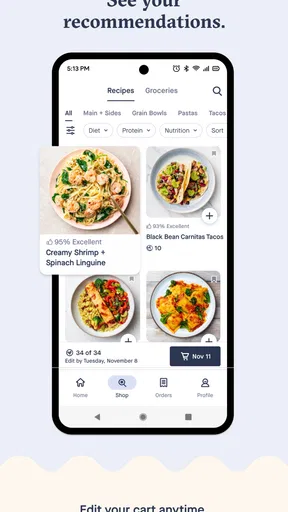
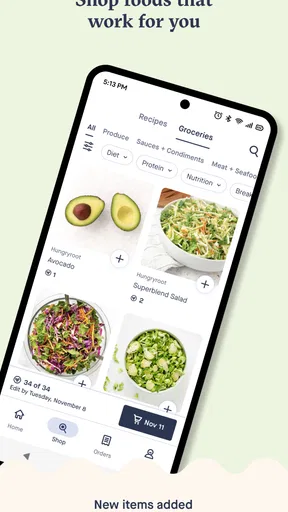
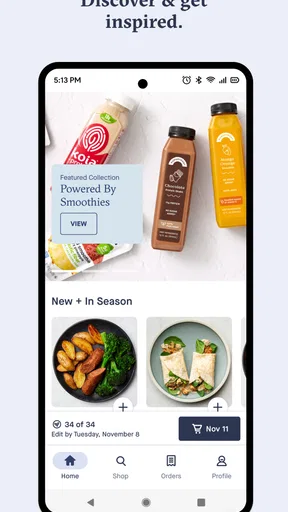
Hungryroot is a grocery delivery and meal-planning app that combines ready-to-cook ingredients, simple recipes, and everyday pantry products. After creating an account, you can complete a preference quiz and receive personalized meal suggestions based on your dietary goals, favorite foods, cooking habits, and household size. You can adjust the selections, add groceries, and schedule delivery through the app.
Can I customize my Hungryroot order and meal preferences?
Yes. One of Hungryroot’s most useful features is the ability to customize your order before checkout. You can swap ingredients, remove suggested meals, change quantities, and add individual grocery items. The app also lets you update preferences such as vegetarian eating, allergies, disliked ingredients, and cooking time, although you should always review product labels carefully for specific dietary needs.
How much does Hungryroot cost, and is there a subscription?
Hungryroot generally works through recurring grocery orders, but the exact price depends on the meals, products, portions, delivery location, and order size you choose. The app displays the estimated total before you confirm a purchase. Because pricing and promotions can change, check the current checkout details, delivery fees, taxes, and any applicable minimum order requirements before placing your first order.
Does Hungryroot accommodate vegetarian, vegan, gluten-free, or other dietary preferences?
The service offers filters and preference settings designed to help users find meals and groceries that match eating styles such as vegetarian, vegan, gluten-free, or higher-protein plans. However, these options should be treated as guidance rather than a guarantee for people with severe allergies or medical dietary restrictions. Always inspect the ingredient list, allergen statement, and preparation instructions before eating.
Can I pause, skip, or cancel Hungryroot deliveries?
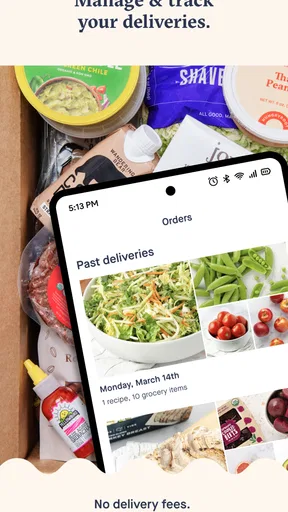
Hungryroot normally provides account controls for managing upcoming orders, including editing, skipping, pausing, or canceling deliveries, subject to the service’s cutoff times. It is important to make changes before the weekly order deadline shown in your account, because late changes may not stop processing or payment. Review the order status and confirmation screen after making any adjustment to avoid unwanted deliveries.


